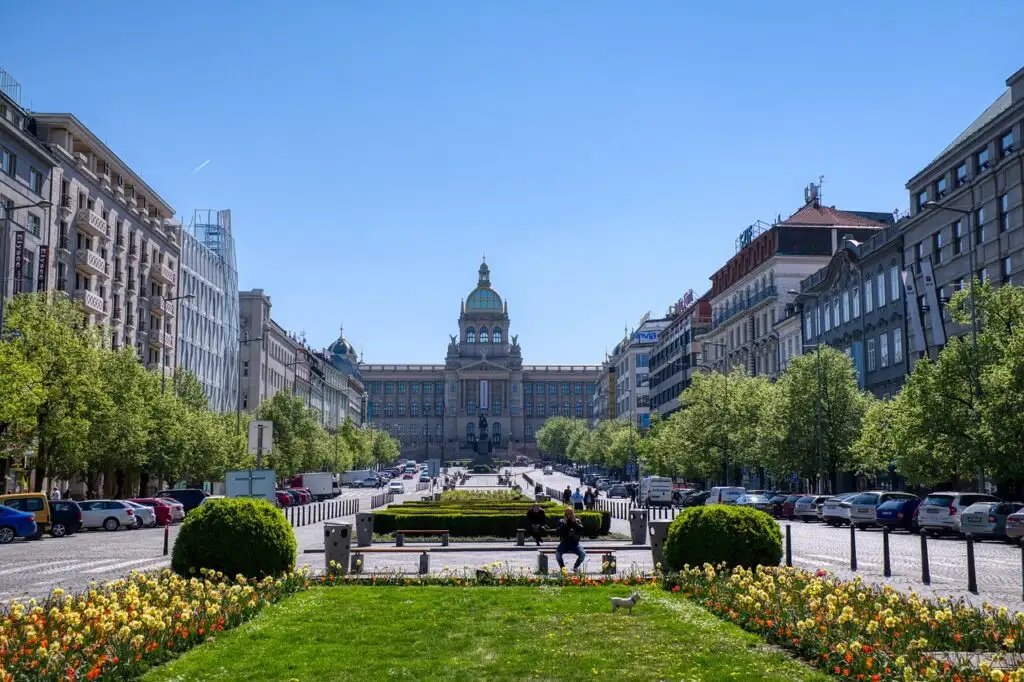
If you are looking for the absolute center of gravity in Prague, look no further than Wenceslas Square (Václavské náměstí). While its name suggests a traditional square, it is actually a massive, sweeping boulevard stretching 750 meters long and 60 meters wide in the heart of the New Town (Nové Město). This is where the city’s deep history, high-street shopping, and political energy collide.
From 14th-century horse markets to the revolutionary speeches that ended Communism, this square has seen it all. For the smart traveler, Wenceslas Square isn’t just a place to walk through; it is a destination to be strategized. Whether you are hunting for the best Czech comfort food, exploring Art Nouveau architecture, or looking to optimize your shopping budget, this guide will ensure you navigate the “beating heart” of Prague like an expert.
Quick Facts: Wenceslas Square at a Glance
| Category | Details |
|---|---|
| Location | New Town (Nové Město), Prague 1 |
| Dimensions | 750m long by 60m wide (A boulevard, not a square!) |
| Top Landmark | National Museum & the St. Wenceslas Statue |
| Best For | History, International Shopping, and Transit Links |
| Local Tip | Avoid the “tourist menu” restaurants on the main drag; duck into the side passages for better value. |
| Smart Move | Use the square as a base—Old Town Square is just a 10-minute walk away. |
Ticket & Value Comparison: Optimizing Your Visit
Wenceslas Square is an open public space, but the attractions surrounding it require some smart planning to save both time and money.
| Experience Type | Best For… | What’s Included? | Smart Value |
|---|---|---|---|
| DIY Walking Tour | Budget-conscious travelers | Seeing the St. Wenceslas Statue, the Jan Palach Memorial, and the Lucerna Passage for free. | High. Great for photography and general atmosphere. |
| Prague CoolPass | Museum lovers & families | Entry to 90+ attractions, including the National Museum at the top of the square. | Top Choice. Essential if you plan on visiting the Museum and nearby galleries. |
| Guided History Walk | Context hunters | A 2.5-hour tour explaining the Velvet Revolution and the square’s political significance. Join a Walking Tour >> | Expert Choice. Highly recommended for understanding the “soul” of the city. |
| Medieval Dinner | Group entertainment | An evening of “decadent” food, unlimited drinks, and performances in a nearby cellar. | Good. A fun way to experience Czech “indulgence” in a social setting. |
A Bite of History: From Horse Markets to Freedom
The story of Wenceslas Square begins in the 14th century, when Emperor Charles IV established the “New Town” and designated this area as a central horse market. For centuries, it was a simple commercial hub. It wasn’t until the 19th century that it was renamed after Saint Wenceslas, the patron saint of Bohemia.
In the 20th century, the square shifted from a marketplace to a stage for the most pivotal moments in Czech history:
- 1918: The declaration of Czechoslovak independence was read here.
- 1968-1969: Following the Soviet invasion, the square became a site of tragic protest. You can still see the memorial to Jan Palach and Jan Zajíc, two students who self-immolated in protest against the regime, located just below the St. Wenceslas statue.
- 1989: The Velvet Revolution. Hundreds of thousands of citizens gathered here, jingling their keys to signal the end of the Communist era. Václav Havel famously delivered his history-making speeches from the balcony of the Melantrich Building.
Today, the square is a symbol of the “New” Prague—a place where you can find a 100-year-old cafe next to a brand-new international retail store.
The “Smart” Guide to Wenceslas Square
1. Architecture & Hidden Gems
Don’t just look at the shop windows; look up! The square is a gallery of Art Nouveau and Czech Cubism.
- Lucerna Palace: This passage was built by the grandfather of former president Václav Havel. Inside, you’ll find shops, a cinema, and the famous, controversial sculpture by David Černý—a version of St. Wenceslas riding an upside-down dead horse.
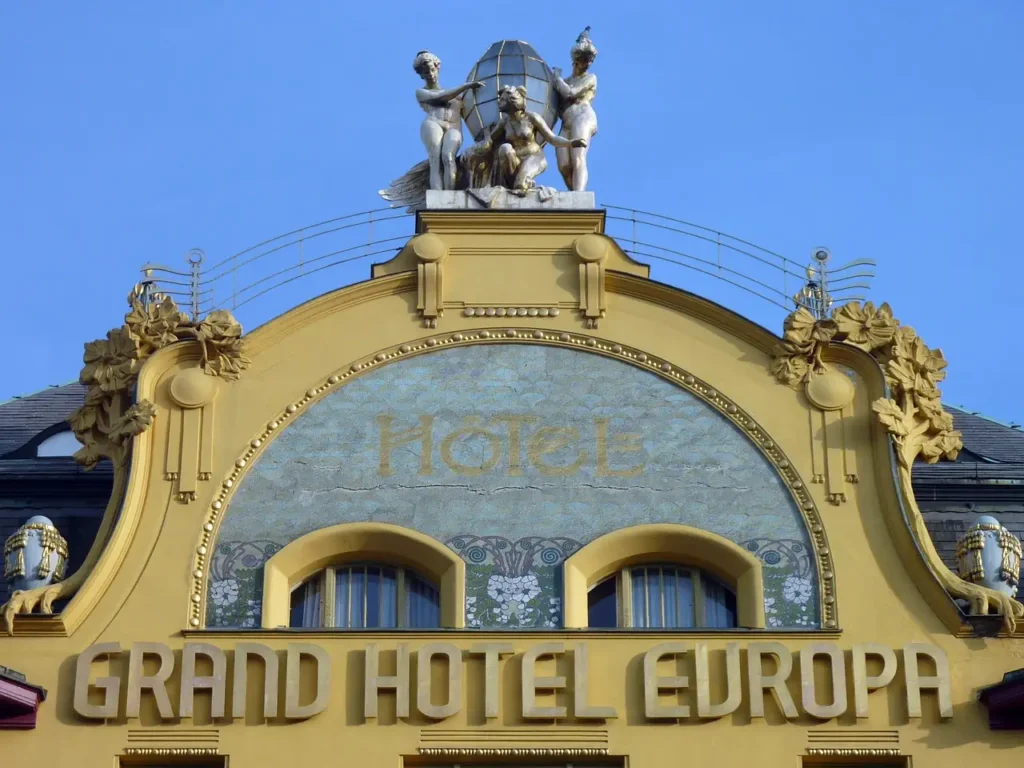
- Grand Hotel Europa: An absolute masterpiece of Art Nouveau that is impossible to miss.
- The National Museum: Sitting majestically at the top of the square, this Neo-Renaissance building is the primary keeper of Czech history and culture.
2. Authentic Eating: Skip the “Chimney Cake” Trap
You will see Trdelník (Chimney Cake) stalls everywhere. While tasty, these are not actually Czech—they were brought from Hungary to appeal to tourists. To eat like a local, look for these instead:
- Chlebíček (Open-faced sandwiches): These are the true stars of Czech snacks. They consist of bread topped with meats, eggs, and spreads.
- Svíčková: The national dish of beef sirloin in a vegetable cream sauce with bread dumplings (Knedlíky).
- Smart Tip: Head to a Lahůdky (traditional deli) like Libeřské lahůdky near the Museum of Senses to eat these delicacies at local prices. If you want a break from meat, try Smažený sýr (Fried Cheese), often called “Smažák” by locals.
3. Shopping: High Street to High History
Wenceslas Square is a shopper’s paradise, featuring giants like Marks & Spencer and various international fashion labels.
- The Palladium Connection: If you need even more variety, the massive Palladium Mall is just a 10-minute walk (or one metro stop) away at Republic Square. It features over 200 shops, including a multi-floor Zara and unique Czech boutiques for high-quality, local souvenirs.
- Smart Move: If you are shopping at Palladium or Wenceslas Square, remember to ask for Tax-Free forms if you are a non-EU resident to save on VAT.
Smart FAQ – Wenceslas Square
Yes, it is the center of Prague’s nightlife and is generally very safe and well-lit. Like any major city, stay aware of your surroundings, but you’ll find plenty of locals and tourists enjoying the bars and clubs late into the evening.
Head to the cafe in the National Museum or one of the historic hotel balconies like the Grand Hotel Europa. For a coffee with a view of the nearby Republic Square, try the Costa Coffee or Starbucks inside the Palladium Shopping Center .
Always use Czech Koruna (CZK) or a credit card. While many shops on the square accept Euros, the exchange rate they offer is usually very poor.
Easily! Wenceslas Square is perfectly positioned between the New Town and Old Town. You can walk to the Astronomical Clock in about 15 minutes.
Absolutely. The square hosts beautiful Christmas Markets in December and Easter Markets in the spring. On November 17th, the square fills with people lighting candles to commemorate the Velvet Revolution.
Analogy for Understanding: Think of Wenceslas Square as the living room of the Czech nation. It’s where the family (the citizens) gathers for big celebrations, where they come to voice their disagreements during protests, and where they keep their most prized possessions (the National Museum). It may have been modernized with a new “entertainment system” and “fancy furniture” (modern shops and malls), but the foundations and the history in the walls remain the same.
To visit Prague without spending time in this square is like visiting a home without ever stepping into the room where all the life happens.