Explore Alfons Mucha’s legacy & Prague’s Art Nouveau masterpieces. Get expert tips on the new Mucha Museum, the Slav Epic & hidden city gems.
Prague is the world capital of Art Nouveau (or Secese in Czech), and one name stands above all others: Alfons Mucha. While his style defined the Parisian “Belle Époque,” his heart—and his most profound work—remained in Prague.
This guide helps you navigate Mucha’s legacy, from the world-famous posters to the hidden stained glass windows most tourists miss.
The Man Who Defined an Era
Before he was a national icon, Mucha was a penniless Moravian artist in Paris.
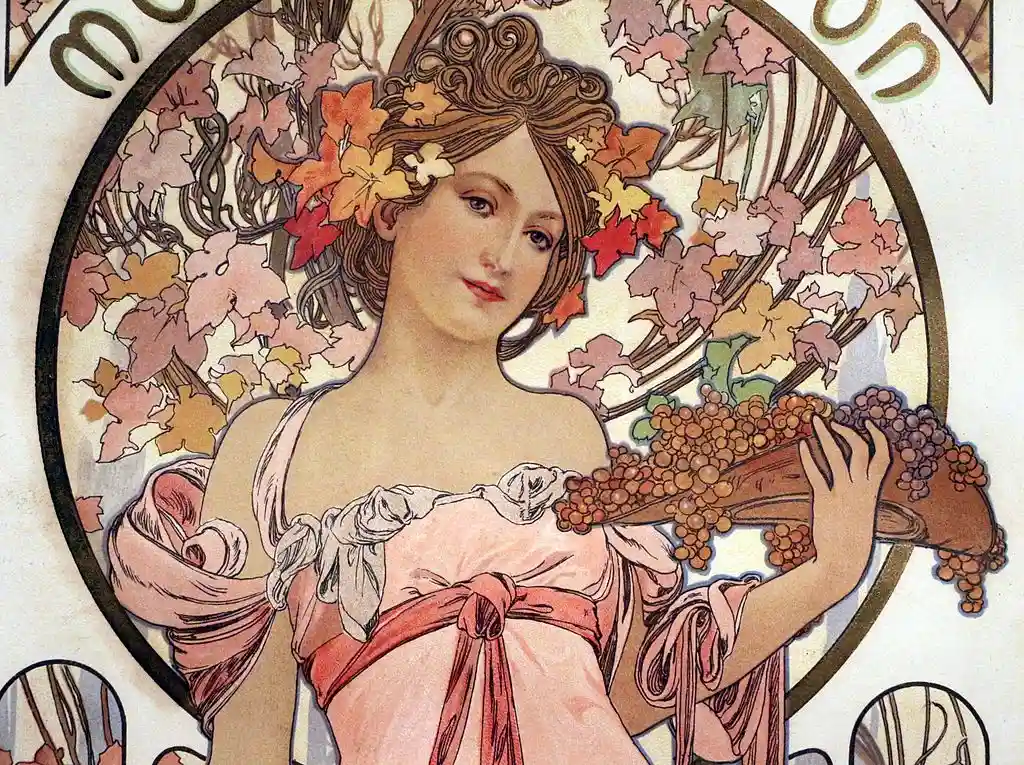
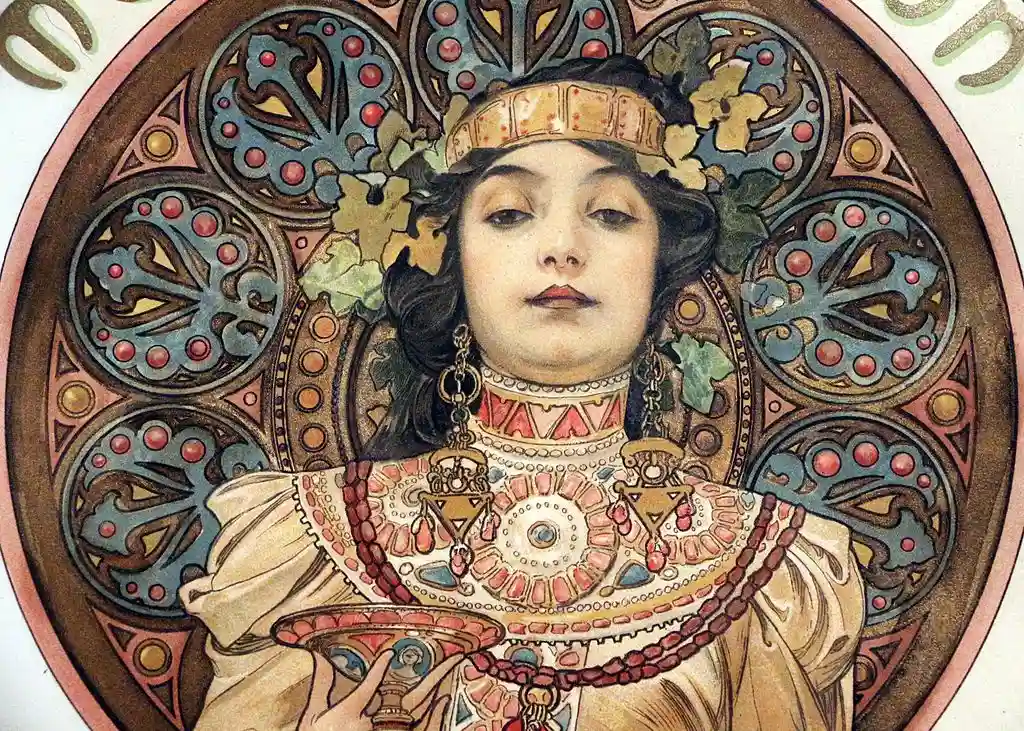
His life changed overnight in 1894 when he designed a poster for the actress Sarah Bernhardt. That single poster, Gismonda, birthed the “Mucha Style”: delicate female figures, intricate botanical motifs, and halos of geometric patterns.
Despite his global fame in Paris and New York, Mucha returned to Prague in 1910 to dedicate his life to the Czech people. He designed the nation’s first banknotes, stamps, and even its police uniforms—all while working on his monumental masterpiece, The Slav Epic.
“Art exists only to communicate with the people.” — Alfons Mucha
Where to Find Mucha in Prague: The “Smart” Shortlist
Don’t just wander; use this strategic breakdown to see the best of Mucha based on your time and budget.
1. The Mucha Museum (The Deep Dive)
Located in the historic Kaunický Palace, this is the only museum in the world dedicated strictly to his life.
- What to See: The “Four Seasons” posters and personal sketches from his Parisian studio.
- Smart Tip: It’s a small, manageable museum. You only need 45–60 minutes here, making it a perfect “strategic stop” between Wenceslas Square and the Old Town.
- Book Mucha Museum Tickets
2. St. Vitus Cathedral (The “Hidden” Masterpiece)
Many tourists enter the Cathedral at Prague Castle and look straight at the altar. Don’t do that. Turn to the third chapel on the left in the North Nave.
- What to See: Mucha’s vibrant stained glass window depicting the lives of Saints Cyril and Methodius.
- Smart Tip: Visit in the morning. When the sun hits the north side of the cathedral, the colors are at their most electric. No extra ticket is needed if you are already touring the Castle.
- Book Prague Castle Entry Tickets
3. The Municipal House (The Art Nouveau Jewel)
This building is the peak of Czech Art Nouveau. Mucha decorated the Mayor’s Hall with massive murals representing Slavic unity.
- Smart Tip: You can only see the Mayor’s Hall via a guided tour. The “Smart” Hack: If you’re short on time, just have a coffee in the Municipal House Café. The interior is a pure Art Nouveau time machine, and you get the vibe for the price of an espresso.
- Book a Concert in Smetana Hall and enjoy Mocha’s Masterpiece.
The Slav Epic: Mucha’s Monumental Gift
If you want to understand the “Real Mucha,” you must see The Slav Epic (Slovanská epopej). It is a series of 20 massive canvases (some 8 meters wide) depicting 1,000 years of Slavic history.
| Feature | The Slav Epic Details |
| Size | 20 canvases, up to 6×8 meters each. |
| Time to Create | 18 years of Mucha’s life (1910–1928). |
| Current Location | Usually Veletržní palác (National Gallery) or Moravský Krumlov. |
| Smart Advice | Always check the current location before you travel; these paintings are frequently moved for restoration or exhibitions. |
“Smart” Art Nouveau: Seeing the City for Free
You don’t always need a museum ticket to experience Art Nouveau in Prague. Mucha’s influence is in the city’s bones.
- The Main Railway Station (Hlavní nádraží): Go to the old foyer to see the stunning Art Nouveau dome. Most people rush past it to the modern platforms—don’t be one of them.
- Grand Café Orient: While Mucha was about curves, this café is about angles. It’s the world’s only Cubist Café and sits in the House of the Black Madonna. It’s the perfect stylistic contrast to Mucha.
- Pařížská Street: Walk this luxury street to see the façades of the buildings; it’s a masterclass in Art Nouveau architecture.
From Post-Punk to Tattoos: Mucha’s Legacy
Mucha died in 1939 after being interrogated by the Gestapo—a tragic end for a man who loved his country so deeply. However, his “Line” lived on. In the 1960s, psychedelic rock posters borrowed heavily from him, and today, his influence is visible in everything from anime (manga) to high-end tattoo art.